salakhalimunmountain.com – Understanding the travel time between Salak and nearby attractions is the first step in crafting a journey that feels less like a commute and more like a slow immersion into the Javanese highlands. To the uninitiated, distances in West Java can be deceptive; a few kilometers on a map might translate into an hour of winding through emerald rice terraces and steep mountain passes. This is a landscape defined by its verticality and the rhythmic pulse of local life, where the heavy rainforest air greets you long before you reach the trailhead. Whether you are moving from the historic streets of Bogor or transitioning from the rugged beauty of Mount Halimun, every minute spent on the road is a transition. As a guide who has traversed these paths through rain and sun, I can tell you that the secret to a successful trip lies in respecting the mountain’s pace. When you calculate the travel time between Salak and nearby attractions, you are not just measuring minutes, you are preparing your soul for the stillness of the dense canopy light filtering through leaves.
The Vital Connection From Bogor City
For most travelers, the journey begins in Bogor, the city of rain. The travel time between Salak and nearby attractions like the Bogor Botanical Gardens is usually between sixty to ninety minutes, depending heavily on the time of day. This route takes you from the bustling urban center toward the Pamijahan district, where the air begins to thin and the cicada calls grow louder. You will watch the concrete give way to stands of giant bamboo and traditional Sundanese homes with their vibrant gardens. This stretch of road is a sensory bridge, moving you from the humid heat of the city toward the cool, moss covered rocks of the Gunung Bunder gate. It is a drive that demands patience, especially on weekends when the local markets are in full bloom and the roadside stalls are overflowing with fresh durian and mangosteen.
Navigating this path requires an understanding of the local rhythm. During the early morning hours, the road is clear, and the mist still sits low over the river valleys. This is the best time to move, as the travel time between Salak and nearby attractions is at its most predictable. You will see farmers heading to the fields and children walking to school, creating a living tapestry of Javanese life. If you leave too late, you may find yourself sharing the road with the iconic local transport and produce trucks, which adds a layer of vibrant chaos to the journey. However, even in the slow moments, the view of the mountain looming ahead, its peaks often hidden in silver clouds, serves as a constant reminder that the destination is well worth the wait. The transition from urban to wild is a gradual shedding of city stress, allowing the quiet of the forest to seep into your thoughts before you even arrive.
Reaching the Cascades of Gunung Bunder
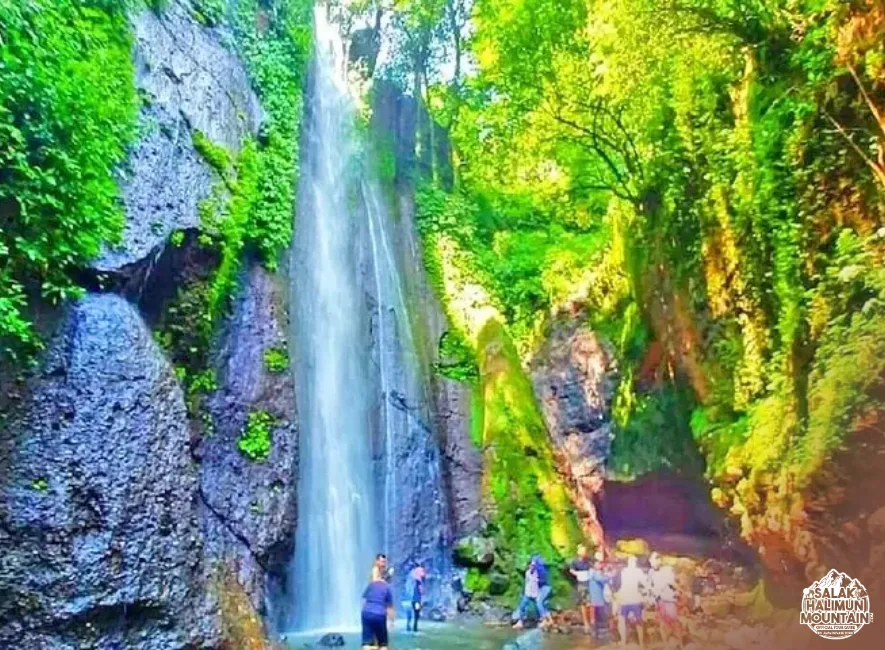
Once you have reached the foothills, the travel time between Salak and nearby attractions like Curug Cigamea or Curug Ngumpet is remarkably short. Within the Gunung Bunder area, most waterfalls are separated by only ten to twenty minutes of driving. These short bursts of travel allow you to hop from one sanctuary to another, moving from the thunderous power of a high cascade to the tranquil stillness of a hidden jungle pool. The roads here are narrow and hug the contours of the volcanic slopes, requiring a careful hand on the wheel and a deep respect for the sheer drops that reveal breathtaking vistas of the rainforest below. You are no longer driving through a region; you are driving through an ecosystem, where the heavy rainforest air is rich with the scent of wild ginger and damp earth.
In this high altitude zone, time seems to behave differently. A fifteen minute drive between two waterfalls might feel longer because of the sheer beauty of the surroundings. You will find yourself wanting to pull over at every bend to photograph the dense canopy light or the way the ferns cling to the moss covered rocks. This is why we always suggest adding a buffer to your estimated travel time between Salak and nearby attractions. The mountain has a way of inviting you to linger, to stop and listen to the rushing rivers that carve their way through the ancient stone. By allowing for a slower pace, you ensure that you arrive at each attraction with a calm mind, ready to fully absorb the healing energy of the forest. The journey itself becomes part of the meditation, a series of short steps deeper into the heart of Java.
Bridging the Gap Between Salak and Halimun
The most ambitious route involves the travel time between Salak and nearby attractions within the Mount Halimun section of the park. While they share a name and a national park status, the two mountains are distinct worlds. Moving from the Salak side to the Halimun side, specifically toward the Cikaniki Research Station or the Nirmala Tea Estate, can take anywhere from three to four hours. This is a journey through the heart of the national park, traversing rugged terrain that showcases the incredible biodiversity of West Java. You will pass through remote villages where the traditional way of life remains largely unchanged, and the soft mud trails of the deep forest are never far from the roadside. This route is for those who truly want to understand the scale of this ancient wilderness.
The road to Halimun is an adventure in itself. It is less about speed and more about endurance, as the pavement often gives way to gravel and the inclines become more pronounced. As you move between these two giants, the scenery shifts from the pine plantations of Salak to the primary rainforest and sprawling tea gardens of Halimun. The travel time between Salak and nearby attractions on this side is influenced by the weather; heavy rains can turn the path into a challenge for even the most experienced drivers. However, the reward for this long journey is a sense of isolation and peace that is increasingly rare. You will find yourself in a world of giant tree ferns and rare primates, far from the reach of the city, where the only clock is the rising and setting of the sun over the mist shrouded ridges. Every hour on the road is an hour deeper into the ancient soul of the island.
The Route to the Cidahu Eastern Gate
For those focusing on the southern and eastern slopes, the travel time between Salak and nearby attractions like the Cidahu camping grounds is another essential calculation. From the main Sukabumi highway, the ascent to Cidahu takes about forty five minutes. This path is famous for its steep climbs and the cooling air that flows down from the Salak craters. As you rise above the valley floor, the noise of the highway fades, replaced by the whispering of the wind through the Altingia trees. Cidahu is a hub for those seeking the hot springs and the higher trekking routes, and the road leading there is a winding ribbon of asphalt that offers some of the best views of the mountain’s southern face. The heavy rainforest air here is particularly crisp, providing an immediate sense of rejuvenation for the tired traveler.
When planning the travel time between Salak and nearby attractions in Cidahu, consider that this area is a popular weekend getaway for local residents. The narrow roads can become congested during peak times, so an early start is always recommended. Arriving at the Cidahu gate just as the sun is beginning to filter through the canopy is a spiritual experience. You see the steam rising from the hot springs and the mist clinging to the moss covered rocks, creating a scene that feels like it has been pulled from an ancient Javanese legend. The time spent on the road becomes a form of meditation, a slow shedding of the urban world in preparation for the raw power of the volcanic landscape that lies ahead. You will feel the temperature drop with every kilometer, a physical sign that you are entering a space.
Safety and Road Conditions in the Rainforest
The actual travel time between Salak and nearby attractions is always at the mercy of the mountain’s climate. Mount Salak is known as one of the wettest places on the island of Java, and a sudden tropical downpour can transform a simple drive into a careful navigation of the elements. During the rainy season, the roads can become slippery, and the mist can reduce visibility to just a few meters. This is why we emphasize that travel time between Salak and nearby attractions should never be rushed. Safety is our primary concern, and moving slowly allows you to react to the changing conditions of the soft mud trails and paved sections alike. Our local guides are experts at reading the clouds and knowing when to wait for a storm to pass, ensuring that your arrival is safe and serene.
Furthermore, the infrastructure in the highlands is constantly interacting with the forest. Occasionally, fallen branches or minor landslides can affect the travel time between Salak and nearby attractions. This is not a reason for concern but a part of the adventure of visiting a living, breathing national park. The local communities are incredibly resilient and quick to clear the paths, but it pays to have a flexible schedule. When you travel with an open mind, a delay is not an obstacle; it is an opportunity to sit by a roadside stall, sip a hot coffee, and listen to the cicada calls as the rain clears. This adaptability is the mark of a true explorer, one who understands that the mountain dictates the pace, not the GPS. You are on mountain time now, and there is no better place to be.
Planning Your Daily Itinerary
To maximize your experience, we recommend focusing on one specific sector of the park per day. Trying to combine the travel time between Salak and nearby attractions in both Gunung Bunder and Cidahu into a single afternoon is a recipe for exhaustion. Instead, dedicate your morning to the waterfalls of the west, or your afternoon to the misty tea plantations of the north. By narrowing your focus, you reduce the time spent in transit and increase the time spent in direct contact with the nature. You will have more moments to sit quietly on a moss covered rock, more time to watch the eagles soar over the ridges, and more opportunities to connect with the local community. This is how the magic of Salak Halimun is truly discovered, through deep, unhurried presence.
When you look at the travel time between Salak and nearby attractions, remember that the most beautiful sights are often found in the quiet stretches in between. A hidden stream by the side of the road, a rare orchid clinging to a tree trunk, or the way the golden hour light illuminates the rice terraces are all rewards for those who do not rush. We suggest choosing two or three key spots and allowing the journey between them to be a part of the joy. This balanced approach ensures that you return from your adventure feeling energized rather than drained, with a heart full of stories and a mind filled with the peaceful images of the deep rainforest. Your vehicle is just the vessel; the real journey happens in the spaces where the road meets the wild, and your heart begins to beat in time with the mountain.
The Cultural Landscape of the Mountain Roads
The travel time between Salak and nearby attractions also offers a unique window into the cultural heritage of West Java. As you drive through the foothills, you are passing through lands that have been cultivated for centuries. You will see traditional architecture, communal washing areas by the streams, and small village markets that serve as the social hubs of the highlands. These sights are as much a part of the national park experience as the waterfalls and the trekking trails. By traveling via the local roads, you are supporting the local economy and witnessing the resilience of a people who live in harmony with a powerful volcano. Every village you pass through is a reminder of the deep connection between the Sundanese people and their ancestral lands, a relationship built on respect and gratitude.
Stopping for a meal at a local warung during your travel time between Salak and nearby attractions is an experience you should not miss. The flavors of the mountain, fresh vegetables, spicy sambal, and steaming rice, are the perfect fuel for your journey. These moments of local interaction are often the highlights of a trip, providing a sense of place that goes beyond the visual beauty of the landscape. You will find that the people here are as warm as the mountain sun and as welcoming as the forest shade. Their stories add depth to your adventure, grounding the geological wonders of the mountain in the reality of human life. The time spent on the road is never wasted when it leads to such meaningful connections and flavorful discoveries, making every kilometer a gift.
Navigating Night Travel and Sunset
While the mountain is beautiful at all hours, we generally advise against long travel time between Salak and nearby attractions after dark. The lack of street lighting and the potential for mist or rain can make the winding roads challenging to navigate at night. Furthermore, the magic of the landscape is best seen under the light of the sun or the soft glow of the moon. We recommend planning your day so that you reach your accommodation or base camp before the sun dips below the horizon. Watching the sunset from a high ridge is a spectacular way to end the day, but being safely off the road before the deep darkness of the forest sets in is a matter of practical safety. This allows you to settle in, listen to the evening chorus of the jungle, and prepare for the next day’s exploration.
If you find yourself on the road as evening falls, the travel time between Salak and nearby attractions can become an eerie and atmospheric experience. You will see the lights of the villages twinkling in the valleys below and hear the nocturnal animals beginning their shift in the canopy. While it is beautiful, the narrow roads require your full concentration. Our guides always prioritize a safe and timely return, ensuring that you can relax and enjoy the night air without the stress of a difficult drive. The stillness of the mountain at night is a different kind of magic, best enjoyed from the porch of a forest lodge or the warmth of a campfire, where the only thing you have to navigate is the trail of the stars across the clear highland sky.
Embracing the Journey to Salak Halimun
In the end, calculating the travel time between Salak and nearby attractions is about more than just logistics. It is about understanding that you are entering a world where the modern rules of speed and efficiency do not apply. The mountain moves at its own pace, and the roads that serve it are designed for connection, not just transit. Every turn, every climb, and every pause is an invitation to look closer at the world around you. By embracing the slow path, you open yourself up to the true spirit of Salak Halimun, a place of ancient beauty, vibrant culture, and profound peace. You are not just visiting a park; you are becoming a part of a landscape that has inspired generations with its mystery and majesty. The time you spend on the road is the price of admission to this extraordinary sanctuary, and it is a price well worth paying.
So, if you’re ready to explore the wonders of Mount Salak Halimun, head over to our ONLINE BOOKING PAGE and let’s start planning your adventure. Or simply CLICK THIS LINK to chat with us on WhatsApp.
With our team, you’re not just getting a guide; you’re gaining a local friend who will ensure your trip is nothing short of extraordinary.